The dirty business of directors’ liability

The dirty business of directors' liability

A discussion about D&O Insurance

Last week was a blur, I spent three days on the road with the Insurance Bootcamp folks. We’ve done Cape Town, Durban and Joburg and now I’m sitting in my hotel room, massively inspired to write a little something of this grand adventure.

Eager insurance pros magically fill the Balalaika conference room

Firstly let me clarify that Insurance Bootcamp has nothing to do with physical exercise. Nor does it involve brokers in a race to pilfer each other’s clients, nor is it a wrestling match between underwriters as they try to beat each other into submission with rate cuts. In fact, it mostly involves chugging down coffee and baked goods whilst spewing forth great wisdom about the mysteries of the world’s second oldest profession. This particular Bootcamp focused on the ever-expanding mountain of litigation risks facing business owners.

As such financio-legal wisdom is not easy to come by (I do believe I just created that fantastic term by the way. Readers may use it as they wish without fear of copyright reprisal). Anyway, forgive the digression but any notion that I may have possessed this peculiar combo of financial services and legal knowledge was quickly shattered when an obviously impressed delegate, who was clearly paying attention to my slides, complimented me on my choice of socks. Herewith a photo of day 1, 2 and 3 socks for your information.

Day 1 thru 3 foot cover

Aside from a clear demonstration of superior taste in footwear I’d been asked to share some of my experiences with some oft misunderstood areas of liability business namely, Professional Indemnity (PI) and Directors & Officers Liability (D&O). Who names these products by the way? You’d think that given the flexibility of acronyms, that a bit more creativity would’ve been applied. For example, the latter could have been named Derivative Indemnity Liability – Directors & Officers, also known as DILDO. Just think of the possibilities. Upon being appointed to the board, a director could state, “there’s no way I’m exposing my ass unless you get me a DILDO” or ” go ahead and sue me, I’ve got a DILDO and I know how to use it”

Given that there may be readers of this blog who are not in the insurance industry and whom are possibly sensitive to the use of the DILDO, I shall revert to the original D&O.

So what is it then? It’s a legal defence and damages policy invented by Lloyd’s back in 1930, probably as a consequence of the Great Depression. Someone felt it was a good idea to insure the directors just before they threw themselves out of a high-rise window. After all what good would the embattled CEO be to a disgruntled shareholder when he was broke, both physically and financially.

Unlike the basement-diving, kamikaze directors of the time, the cover never really hit the ground, that is until the Americans got hold of it. Americans love liability policies as much as they love guns. Guns can also be useful for solving shareholder disputes by the way. Cheaper than the D&O policy and you don’t have to provide a copy of your financials to get one.

Dirty Business
Dirty Business

So, many years later, this incredible piece of insurance wordsmithery found its way to the shores of our country. South Africa, the land of opportunity. The place where even the most corrupt of politicians can legally earn a living by fleecing honest folks out of their hard-earned cash. Fortunately D&O insurance is gaining popularity amongst private sector directors, because unlike their public sector counterparts, they are actually held accountable for their mistakes.

The policy really is a “must-have” these days for all directors and business owners. Why, you ask? Why, oh wise liability guy with great socks?

Well, Directors and Officers liability insurance protects business leaders from litigation which may be initiated against them by stakeholders. A stakeholder, in the context of the Companies Act, is not a person wielding a large cut of beef, nor a fearless hunter digging up dirt and seeking out blood-sucking miscreants (although I’m told Thuli Madonsela is making excellent progress in her investigations these days). Actually a stakeholder could be any party that suffers a loss as a result of the negligent actions of the directors or officers in carrying out their fiduciary duties. The word fiduciary it turns out is hysterically funny to my teenagers, who immediately identified the hidden colloquial term, “douche”. For those that don’t know, the word really refers to the high standard of care expected of directors, rather than a derogatory term that could be used to describe a politician.
Don't throw away your vote
Don’t throw away your vote

A client of mine had the misfortune of going head to head with the National Consumer Commissioner a while ago. It’s ok to chat about this because neither of the protagonists in the tale subsequently retained their positions. The whole sordid debacle did however cost the CEO and the Company over R7m in legal fees. Fortunately the DILDO was close at hand and a large portion of the financial pain was taken care of by the insurers.

So it would appear that having this specialist insurance is a necessity and that every decision maker in the company should have the benefit of a policy. This, coupled with the relatively low premiums charged by insurers does mean that brokers are able to sell the cover with relative ease. Like selling firepools at a national security conference. Herein lies the danger for the insurance agent selling the cover. The temptation to spend less time explaining the cheaper covers to a potential insured is ever-present. Exclusions and notification requirements for D&O can be a little different to traditional policies. Given that the directors personal assets are at stake when a claim ensues, the risk of repudiation should be mitigated through careful explanation of cover with every client.

Sounds complicated? Herewith something simple for my fellow insurance intermediaries, for free:

The Liability Guy’s Theory of Relativity, “The amount of commission derived from the sale of D&O is inversely proportional to the amount of shit coming your way, if you make a mistake.”

In all seriousness, hats off to the Risk SA guys and all involved with Insurance Bootcamp. Great to be a part of the event.

A selfie. Me and 200 friends in Jhb

I’m the Liability Guy, take care.

What the hell is a liability anyway?

What the hell is a liability anyway?

And should you care?

Setting fire to the neighbours property, kids bouncing off jumping castles, cosmetics that burn your face off…. What the hell is a liability? Who the heck is a third party? Whatever happened to the second party? These and other conundrums solved in the first blog in a series that demystifies my world of liabilities.

A lot of people ask me what on earth a liability actually is? If you’re an accountant, too much liability is not a good thing. In the financial world a liability is the other side of the balance sheet; the dark and scary side that keeps you up at night. For many South Africans it’s the only side of the balance sheet unfortunately. Debts and sacks of money owed to other people often make up the bulk of financial liabilities.

By now you are thinking, “I knew this blog was going to be crap, if I wanted to be reminded of my financial woes I’d check my shares in a certain furniture and clothing retailer” I know you are thinking this because as I am writing it, I too am contemplating a much needed root-canal treatment rather than completing the blog.

Fortunately the type of liability that I am involved with, has nothing to do with accounting. Sorry bean-counters, there’s no ledger-porn to see here. I am the Liability Guy and welcome to the wondrous world of legal liability. This you’ll soon find out is much more exciting because it is here that we deal with:

    • Killer cosmetic compounds that want nothing more than to give your customer that permanently surprised, “where are my eyebrows?” look.
    • Erratic and irresponsible employees that light up more than a cigarette in your client’s warehouse whilst having a sneaky fag in the no-smoking area.
    • Clumsy customers who fall down the stairs in your shop because they’re more into WhatsApp than watching where they are going. If you break it, you buy it doesn’t count when the damaged goods are your client’s legs.
    • Sugar spiked toddles on a such a high in that play area at your restaurant that they bounce right off the jumping castle and straight into Mrs. Mathebula celebrating her 80thbirthday. Maybe that’s why they call them off-spring?

You may be wondering what all these ridiculously, tragic scenarios have in common? Well the truth is they will all probably result in a lawsuit against the owner of the business. There is of course insurance that can cover these events and the source of claims against these policies are generally those that have resulted in injury or damage sustained by a mysterious group of people we call, “third parties”.

“A third party”, I see you raise both eyebrows. “I’m always up for a party, maybe even a second party but a third party? Will there be beer-pong, balloons, a cake or a cow on a spit? Three parties though. Who has that kind of staying power?” you may wonder.

Again, you’ve been misled, just like our accounting friends earlier in this article. The kind of third parties we talk about in liability insurance circles have nothing to do with people drinking and carrying on like teenagers, unless the business being sued is a bar. By the way, if you get drunk in a bar in some parts of the USA and cause an accident, the injured parties may actually sue the bartender for getting the driver drunk. True story, and similar things are on the cards in South Africa in proposed amendments to our own liquor laws.  Did you see what I did with the word “parties” there?

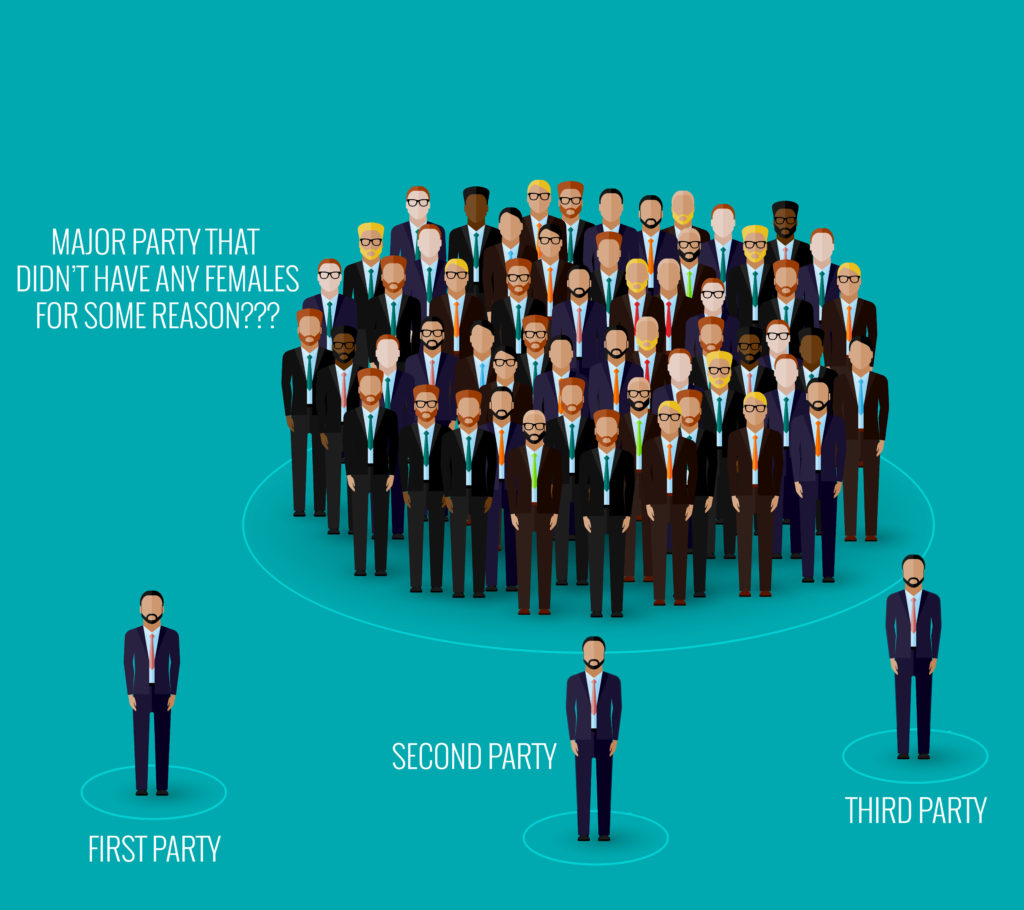
The third parties we talk out in liability insurance are the hapless group of individuals (or even other businesses) who seem to have zero luck and are always on the receiving end of dangerous goods or poor services, inevitably leaving them out of pocket , injured or worse. We call them third parties because they are not a party to the insurance contract directly. The first party is the policyholder (the butcher, baker, candlestick maker or whomever had the foresight to buy the policy), the second party is generally accepted as the insurance company although you will never hear mention of the second party. We don’t ever talk about them. Are they are like the uncle who gets drunk at the family dinner and tries to get amorous with the garden gnome on the front lawn?  Or are they the invisible heroes who want no credit for saving us from financial ruin? That I suppose depends on whether the claim gets paid…

In any event, this tale is not about the invisible second party. Just remember that the third party is the disgruntled, injured and often litigious individual who wants to take you to court. Unless you are a former president of a beautiful country at the tip of Africa, in which case a whole country may want to take you to court.


Don’t get me wrong, many third parties have good grounds for litigating and it is possible that the business actually did something to warrant being sued. Accidents do happen and someone is generally to blame when they do. If it’s not obvious whodunnit then both sides may have their day(s) in court. That’s generally where things get expensive and legal liabilities quickly start to turn into financial liabilities. Lawyers of the world rejoice. Accountants, you are back in play.

It’s these expensive processes in court and the fact that the business may have to compensate the injured third party that warrants buying liability insurance. This is also the primary reason why I have a job. So if you’re a broker, please sell more liability insurance.

Over the next few months I’ll be writing more about the wonders of liability so please be sure to follow this blog.

Note that as I am the LiabilityGuy I have to include a suitable disclaimer so please don’t treat any of these blogs as legal or financial advice. Be sure to chat to your broker if you’re a policyholder or if you’re a broker yourself, chat to your favourite insurance underwriter (follow my eyes) to get some detailed training or product information. The opinions expressed here are all my own, written in my personal capacity.

Related article on this blog : Coffee Cups, Ladders and Vibrators